


Solar Calculator

Solar sizing calculator
Add any device — LTS camera, third-party camera, router, radio, gate controller — by watts or amps. Enter day and night draw separately, and the tool returns the panel count, battery count and whether the site holds through the night. Indicative guidance only; confirm against site conditions before ordering.
Devices on the pole
| Device | Day | Night | Unit | Qty | Draw |
|---|
Site conditions
Your system
What to order
Indicative — not a quotation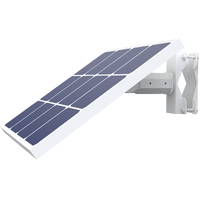
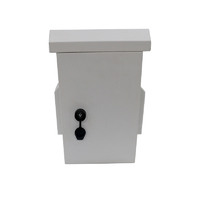
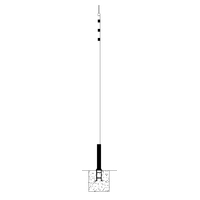
Important — please read before ordering
This tool provides an indicative estimate only. It is not a performance guarantee, a warranty, or a professional engineering assessment. Results are generated from figures you enter and from generalised assumptions about solar conditions. Real-world performance will differ.
Actual runtime and recharge depend on factors outside our control, including:
- Weather and site conditions — consecutive overcast days, storms, smoke, dust and seasonal variation can reduce harvest well below the worst-month averages used here.
- Shading and orientation — trees, buildings, poles and panel tilt or aspect materially affect output. Even partial shading can disproportionately reduce generation.
- Panel condition — soiling, bird droppings, salt and dust reduce yield. Panels require periodic cleaning.
- Actual device consumption — published wattages are often maximums or typicals. Real draw varies with IR and white-light activity, motion, recording mode, PTZ movement, heaters, cellular signal strength and firmware.
- Battery condition and temperature — capacity declines with age and cycle count, and both extreme heat and cold reduce available capacity and charge acceptance.
- Installation quality — cable sizing, run length, connections, voltage drop and configuration all affect delivered power.
Sizing responsibility rests with the installer or specifier. LTS Security Australia does not warrant that any configuration will deliver a particular uptime, runtime or level of availability, and accepts no liability for loss, damage, downtime, missed recording or consequential loss arising from reliance on this estimate. Where continuous availability is critical, build in additional margin, specify redundancy, and consider a mains or backup supply.
We recommend confirming device draw by measurement on a working sample, and contacting our team for a site-specific review before committing to a design. Nothing here forms part of any contract or quotation.
How to read your device's label. Most cameras are quoted in watts at 12 V DC, and most spec sheets give a maximum rather than a typical figure. If you only have one number, enter it as the night value and estimate day at roughly 60% of it — IR illumination is usually the largest single load and it only runs after dark. Where you can, measure the real draw with a clamp meter on a working sample.

